The Circly Wirkly Tree by James Aitchison

Leave a comment

I saw a circly-wirkly tree
making quite a show,
its circly-wirkly branches
in circles liked to grow.
Round and round
without a stop,
up to that bobble
on its top.

At first it made me giddy,
so I sat down in the shade,
and that’s when someone told me
the tree had been hand-made!

Teacher’s note: This poem can be used to talk about topiary, the art of shaping bushes.  Students can be asked to bring examples of topiary to class.
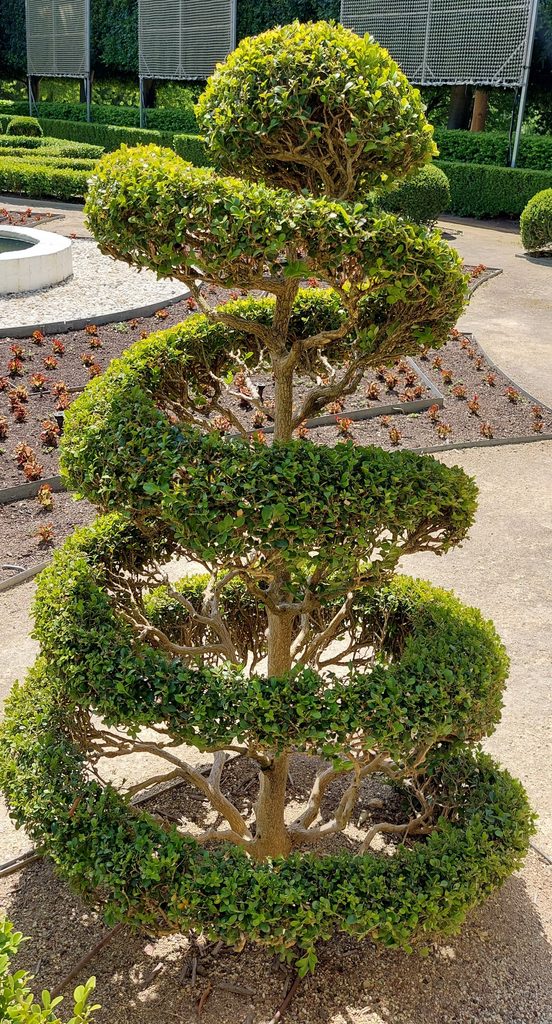
Photo by Ginette Pestana

This post was scheduled for Thursday 22nd October, however we are currently having problems behind the scenes with the ACP website. Please accept our apologies.
Anyone for Oysters? by James Aitchison

Leave a comment

Oysters, oysters,
fresh from the bay,
their shells are shining
in the sun today.

They’ve been growing
for one whole year;
the time to eat them
is almost here.

Oysters taste slimy,
some people say.
But I think they’re great,
any old day!

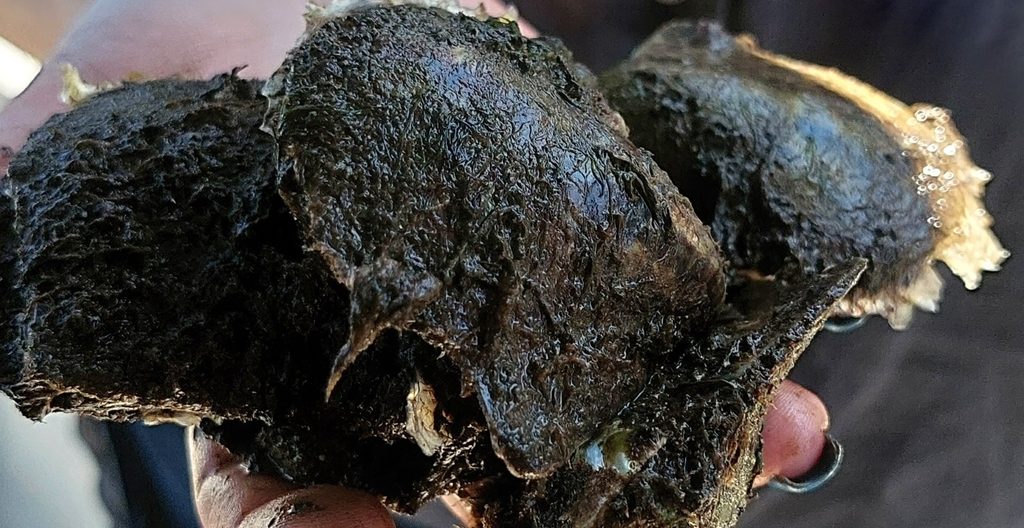
Teacher’s note: It takes a year for an oyster to grow before it’s ready to eat.  People either love them or hate them.  How many students in your class like oysters — and why?  How many know where they come from?  In the photo, the yellow “fingers” are visible — that means the shell has further to grow.

Inspecting oysters at Mooney Mooney, Hawkesbury River. Photo by Ginette Pestana

Native Australian Red Triangle Slug (Haiku) by Leigh van der Veen

Leave a comment

After rain, timid 

tentacles rise. Gum leaf-like, 

algae grazer, glides.

Photo taken by Leigh van der Veen

Did you know?

Red triangle slugs are Australia’s largest native land slug. They can grow up to 14 cm long. They are safe in your vegetable garden as they prefer the microscopic algae found on smooth-barked eucalypt trees.

The Gollywumpa by James Aitchison

Leave a comment

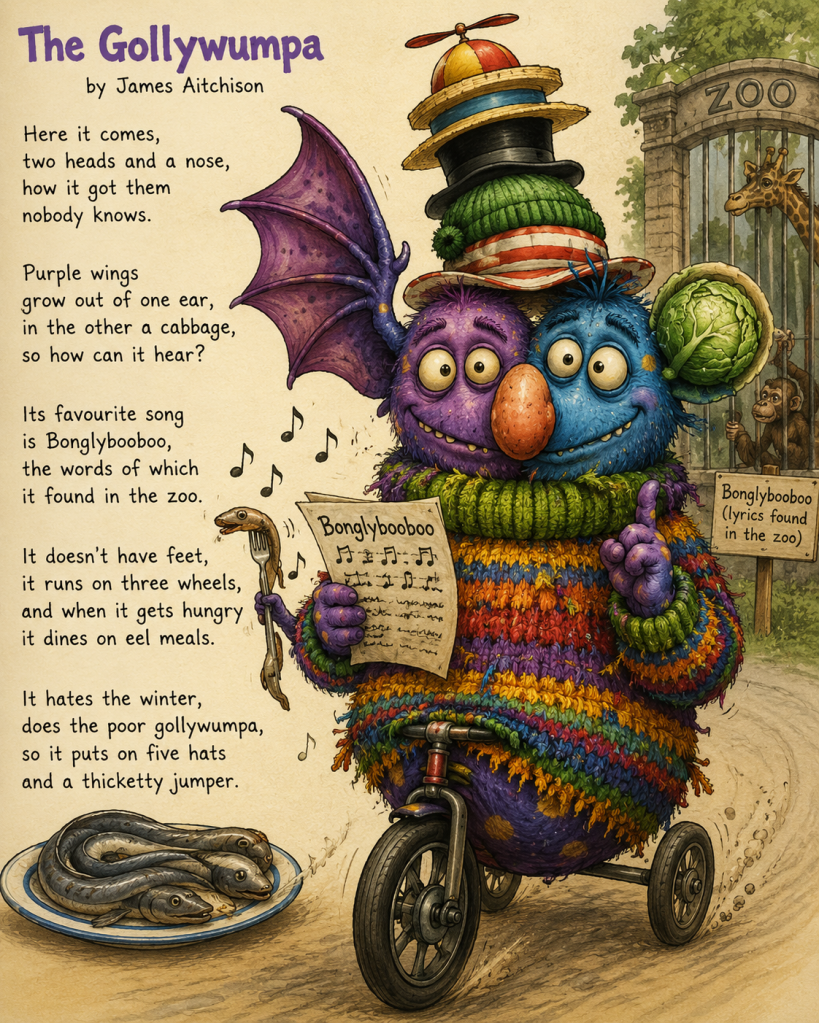
Image created by ChatGPT on reading The Gollywumpa poem

Nonsense with nonce

Introduction: Nonce words are nonsense words created for a specific situation, often in children’s poetry.  In Lewis Carroll’s poem Jabberwocky, he invented the nonce words chortle and galumph, which are now in current use as part of the language.  Perhaps the most famous nonce word — runcible — was created by Edward Lear for his poem The Owl and the Pussycat.  There is no such thing as a runcible spoon.  Lear loved the word so much he wrote about runcible hats, runcible cats and a runcible wall. 

Invite students to invent their own nonce words and use them in poems or stories.  They could also draw what they think their Gollywumpa looks like.

The Gollywumpa by James Aitchison

Here it comes,
two heads and a nose,
how it got them
nobody knows.

Purple wings
grow out of one ear,
in the other a cabbage,
so how can it hear?

Its favourite song
is Bonglybooboo,
the words of which
it found in the zoo.

It doesn’t have feet,
it runs on three wheels,
and when it gets hungry
it dines on eel meals.

It hates the winter,
does the poor gollywumpa,
so it puts on five hats
and a thicketty jumper.

“Imagining a TARDIS”  by Celia Berrell

Leave a comment

Imagining a TARDIS  by Celia Berrell
(Time And Relative Dimension In Space)

What a wonderful toy is the TARDIS.

Doctor Who’s little blue

police box.

It’s bigger inside.

So much stuff it can hide,

from a skate-park to

clean pairs of socks.

Owning a magical TARDIS,

do you think it’s a

secret we’d keep?

Or would that depend

on inviting some friends …

and whether we’d need any sleep?

With a stay-or-go-anywhere TARDIS,

there are infinite things

we could do.

It has so much appeal,

for a toy that’s not real …

let’s imagine instead that it’s true!

The physics of Doctor Who’s awesome time-travelling ship aren’t exactly science fiction: https://www.businessinsider.com.au/physics-of-the-doctor-who-tardis-box-2015-6?r=US&IR=T