
“Recycled Water” by Celia Berrell

Leave a comment


We’re 10cc’s of water and

although the Earth’s our base

we recently went travelling

up there – in outer space.


An astronaut had drunk us

just before his rocket ride.

And so we were the stowaways

that hid in his insides.


Meeting different molecules

we made a lot of friends.

With some we only mingled

while with others we held hands.


While staying in the astronaut

we all kept nice and warm

and floated round inside him and

explored his body’s form.


Eventually he moved us out.

So off we raced in glee.

With other friends I think we were

all classified as pee.


We found ourselves inside a box

with membrane walls all new.

Its holes were just the perfect size

for water to get through.


We said goodbye to all our friends

as they were far too fat

to wriggle through those membrane walls

and join us for a chat.


Now squeaky clean we hung around

inside some holding pen.

Until we found ourselves inside

the astronaut again!
“Absolute Zero” by Celia Berrell

Leave a comment

Molecules and atoms all
vibrate to Thermo’s beat.
Their energy’s identified
by measuring the heat.

Like line-dancers they stay in form
and keep their solid state
when Thermo’s music’s playing cool
and doesn’t change its rate.

By turning up the temperature
they break-dance out of line
and move about as liquid to
our Thermo’s up-beat time.

And when it’s hot they leap about
like maniacs with jazz,
escaping from their dance floor as
they change into a gas.

The winter in New Zealand can
be beautiful with snow,
a solid state of water which
is icy H2O.

And as the sunshine heats it up
its molecules go hip
and melt into a liquid that’s
in puddles, pools and drips.

Now pour some water in a pan
and heat it on a stove.
You’ll see the bubbles forming
then escaping in their droves.

We know that’s steam or vapour
that is wafting from the pot.
You’ve witnessed water’s three-phased states
from freezing, warm and hot.

When solids change to liquid form
it’s called their melting point.
That temperature is different
for different elements.

Hot volcano temperatures
can melt Earth’s crusty rock
while Nitrogen on Triton’s only
found as gas or frost.

Elements and compounds can
exist in different phases,
solid, liquid or as gas.
It varies as heat changes.

And out in space those temperatures
can really be extreme
from freezing void to hottest sun
and all that’s in between.

But even in our universe
the coolest it can go
is measured as one Kelvin,
never Absolute Zero.

This name describes the temperature
where atoms fail to move.
If Thermo turned their music off
they couldn’t even groove!

“Brassica Bonanza” by Celia Berrell

Leave a comment

Brassica Bonanza

(Brassica oleracea)


The humble wild cabbage

named Brassica o

looks more like a weed

than the veggies we know.


Through breeding (like dogs)

to enhance special traits,

there’s more than one

Brassica o on our plates.


Selecting big leaves gives us

Kale, Collard Greens,

while breeding big buds

grows the cabbage we’ve seen.


Exaggerate flowers and

what have we got?

Some huge heads of Broccoli

served steaming hot.


Those cream Cauliflowers

are Brassicas too.

ONE PLANT: MANY VEGGIES

And so good for you!


“Snoopy Spiders” by Celia Berrell

Leave a comment

Snoopy Spiders


Spiders don’t have any ears.

They don’t have any ear-drums.

And so we thought they couldn’t hear

and only felt their webs strum.

But scientists who’ve scanned their brains

noticed they responded

when squeaky chairs and music strains

from far away were sounded.

Special hairs that wobble when

a soundwave moves the air

means jumping spiders hear quite well

through nerves attached to hairs.

These snoopy spiders listen-in

for buzzing enemies

like deadly wasps that sting and sing

some scary melodies!

Inspired by:

https://www.washingtonpost.com/news/speaking-of-science/wp/2016/10/13/surprising-spidey-sense-arachnids-can-eavesdrop-quite-well-without-any-ears/?wpisrc=nl_science&wpmm=1


“Fussy Rainbow-Eaters” by Celia Berrell

Leave a comment

Fussy Rainbow-Eaters


Leaves choose mostly orange-red

then bands of blue

to violet.


Using light to make a meal

of carbohydrate’s

sweet appeal


their chloroplasts feed on the Sun.

But only parts of

light’s spectrum.


Leaves don’t use all sunshine’s beams.

It seems they rarely

eat their greens!


Celia Berrell

First published in Double Helix(October 2015)
Reproduced with permission of CSIRO
www.doublehelix.csiro.au


“Pet Rex” by Celia Berrel

Leave a comment

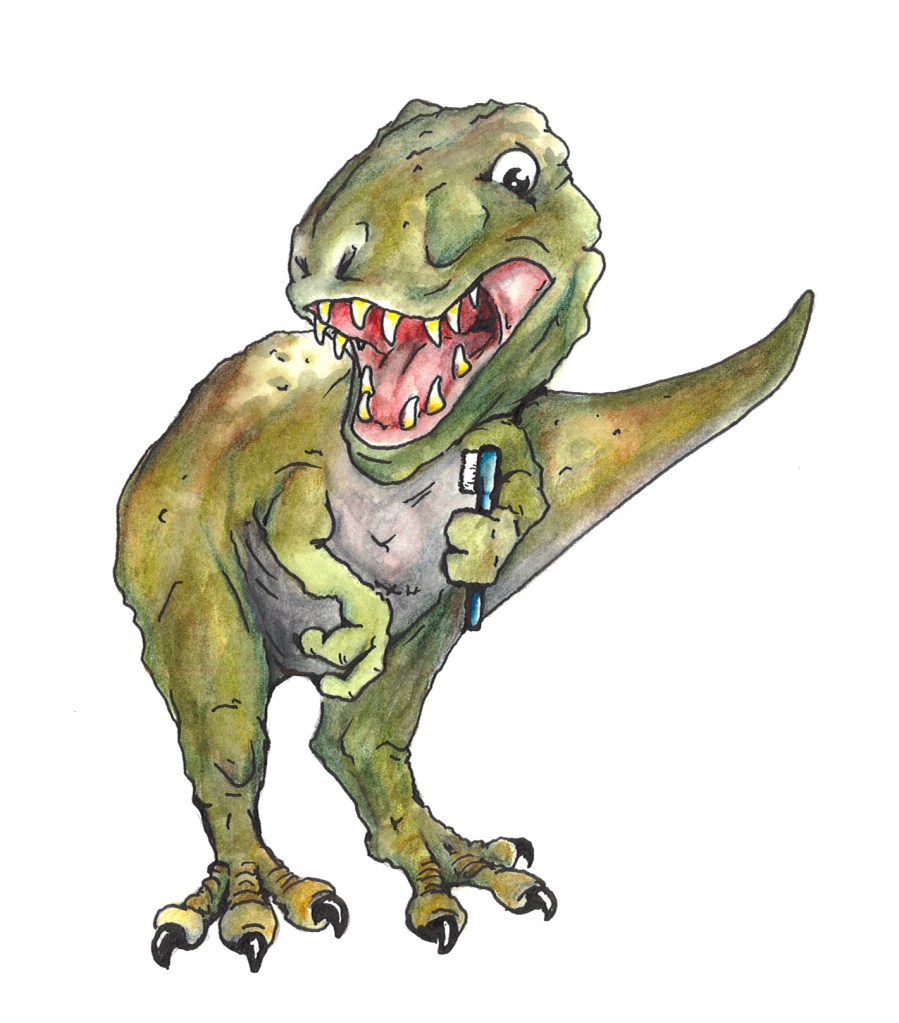
Pet Rex


Some animals

don’t make good pets.

And one of them

would be T rex.

A dinosaur

so tall and wide

there’s no way

he could live inside.


Tyrannosaurus rex

is large.

His head would fill-up

your garage.

Twelve metre driveways

would be great

to fit his tail

inside the gate.


With stinky breath

from eating meat

you’d want to clean

his big strong teeth.

He’s got bad manners

when he’s fed.

His tiny arms

can’t reach his head!


first published in CSIRO’s Scientriffic magazine issue #77 March 2012
with illustration by Science Writer Mike McRae

“Europa’s” Secrets by Celia Berrell

Leave a comment

Europa’s Secrets by Celia Berrell


There’s hope Europa has a sea

where living things could really be

because this moon of Jupiter

has lots of solid ice water.


The pictures of Europa show

a crusty surface white as snow

with many lines and ridges mixed

like ice sheets that have cracked and fixed.


As Jupiter’s great gravity

distorts Europa’s cavity

that energy and friction heats

and melts some water underneath.


We think this frozen water layer

could make a sea that’s hiding there.

So just below that crusty shell

it’s possible some microbes dwell.


Or what if it turns out to hold

some animals both weird and bold

that roam Europa’s chilly sea.

True aliens to you and me!


First published in Scientriffic (March 2011)

Reproduced with permission of CSIRO

www.doublehelix.csiro.au 

Discovering life exists in places beyond Earth – like Jupiter’s icy moon Europa – could be a reality in our lifetime.  Thinking about it makes my imagination run wild!  What will these creatures be like?

Teacher Notes by Jeanie Axton

Heres an interesting article from the NASA website

https://solarsystem.nasa.gov/moons/jupiter-moons/europa/in-depth

As far as poetry goes this topic stimulates the creative imagination of us all. Ask students to brain storm possibilities and then come up with a list of describing words that could be used to match their ideas. An acrostic could be an easy form of poetry to start with on this topic and then move on to other ways of presenting ideas in poetry. Have Fun.

”Muse on the Moon” by Celia Berrell

Leave a comment

Muse on the Moon

The Moon reveals so many things
for humankind to ponder on.

An anchor in celestial seas
or lunar clock to gaze upon.

Ambassador for gravity,
this Queen of Tides is mighty strong.

A temptress for astrology’s
imagined magic – right or wrong.

Love’s locket hung in silent song
reflecting what the Sun once shone.

Ellipse, eclipsed and wandered on,
our lunar quests go on and on.

The Moon reveals so many things
for humankind to wonder on.


“Space Dust SiO2” by Celia Berrell

Leave a comment

A man-made material

Silica aerogel

recently travelled in outer space

collecting the particles

shed by a comet’s tail

bringing them back to a NASA base.


A frothy glass matrix

of mostly air – sandy mix

lighter than feathers and stronger than steel

is brittle-snap crazy

and seems smoky-hazy.

When rubbed on a surface it gives out a squeal!


This stiff-sponge sensation

has great insulation

preventing the passage of heat through its layer.

Like a piece of blue sky

that is crisp, light and dry

its edges look fuzzy, like snap-frozen air.


Space Duster SiO2 by Celia Berrell

http://www.youtube.com/watch?v=GfUIc6efV3w
Lawrence Livermore Quest Lab video