Reading poetry offers a multitude of benefits. It offers unique perspectives that can broaden your worldview and some even stretch your mind to its limits as you work to decipher what the author is really trying to communicate. These reasons are why many English classes in school often include poetry in the curriculum.
Children’s poems may be targeted specifically for a younger audience. But many share valuable insight that people of all ages can benefit from. Here we put together a shortlist of classic children’s poems that we think everyone should read.
The Owl and the Pussy-Cat is perhaps Edward Lear’s most famous poem which was published in 1871. The nonsense poem (a type of literature that uses nonsensical words) was written for a three-year-old girl who was the daughter of Lear’s friend. This poem tells a simple love story between an owl and a cat, and their marriage to each other. Although more than 100 years old, the poem remains beloved to this day and was actually voted the most popular childhood poem in Britain in 2014.
Lewis Carroll was the pen name for Charles Lutwidge Dodgson who was an English writer most notably known for Alice’s Adventures in Wonderland. The poem Jabberwocky first appeared in its sequel Through the Looking-Glass in which the character Alice finds a poem that can only be read by holding it up to a mirror. She finds that she’s unable to decipher what it means. The poem offers one of the best examples of nonsense poetry and has given us words like “galumphing” and “chortle”.
From a Railway Carriage was written by Robert Louis Stevenson and was published as part of his 1885 volume A Child’s Garden of Verses. The poem offers a great example of versification which uses rhythmic patterns to describe a train journey and the view from the window. The poem is told from the author’s perspective so we see that the scenery is constantly shifting.
Matilda was written by Hilaire Belloc and is a classic child’s poem that tells a cautionary tale of the devastating consequences of telling lies. The main subject, Matilda, has a fondness for telling lies which her aunt has tried unsuccessfully since her youth to change. Her constant telling of lies led to her burning to death along with the house she was in. Despite the dark subject, the poem has a light and humorous tone and teaches a valuable lesson that’s applicable today.
Macavity, the mystery cat was written by author T.S. Eliot and tells a short story about Macavity, a master criminal that leaves behind no evidence of his crimes. Macavity is described as a tall and thin ginger cat with deeply sunken eyes. Macavity is a master criminal who constantly evades authorities and covers his tracks with incredible skill. The main character is loosely based on Professor Moriarty from the Sherlock Holmes stories.
Life Doesn’t Frighten Me by Maya Angelou is a simple, repetitive poem. There is no rhyme scheme in the poem but there are lines that rhyme. As you can likely already determined from the title, the poem shares a powerful story about overcoming fear and the importance of self-belief. The poem is written from a child’s perspective so we get more insight on how she describes and overcomes her fear.
Author’s Bio
Alex Morrison has been a SEO expert for over 10 years. In this time, he has worked with a range of businesses giving him an in depth understanding of many different industries including home improvement, financial support and health care.

Veggie Monster – teacher notes –
Activity – Class debate on “Advertising and Prime Time TV, Their Role in Demonising Vegetables”
Activity – Make up an advertising campaign to popularise vegetables. Research TV advertisements and prime time TV shows to see what sort of food is promoted and how. I can think of one popular TV soapie, which has its cast eating pizza and drinking beer in most episodes. What does this say to young viewers.
Note what sort of advertisements come on between 4.00pm and 8.00pm, the time many children, families and young folk would be watching TV. How might you use your campaign to change this?
Activity – Make up recipes with vegetables as the main ingredients – they must be delicious enough that YOU would want to eat them! If there are any vegetarians in the class, ask them to be a consultative panel and to judge the result of the class cooking attempts to make veggies into taste tempting foods!
Activity: Australians have ‘adopted’ vegetables from all over the world.
Create a world map and paste labels bearing the names of common vegetables used in Australia on their countries of origin.
Activity: Are there vegetables that are native to Australia? Study the foods grown and gathered by various Aboriginal groups. If possible, invite a local indigenous leader to discuss with the class the native foods they used and how they prepared them.
TEACHER NOTES
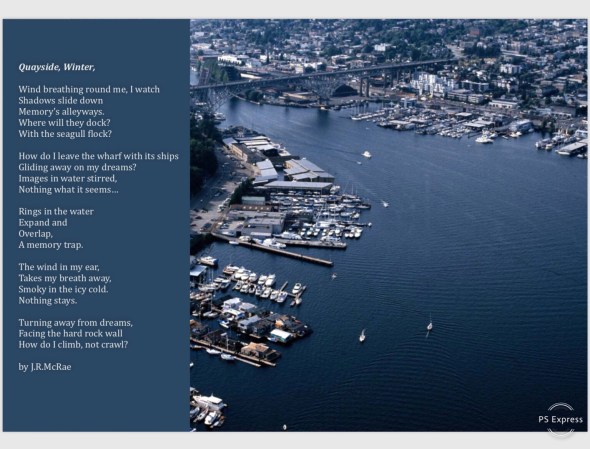
Winter in Australia is very variable.
Activity: Watch the weather report for mid winter and compare the weather report that night for Darwin and for Hobart.
List five reasons for the big difference in temperatures.
Activity: How do you know winter has arrived?
List five things that tell you the season has changed.
Activity: What images in the poem suggest to you that the scene depicted in the poem is set in winter?
CURIOUS COLLECTIVES NO. 12
MONKEYS
I kept reading and counting and reading some more
Till I reached two hundred and sixty four
That’s the number of species in the world of the Monkey
That’s a BIG number – that’s really funky.
To complicate things a little bit more
(at this point my eyes began to get sore)
They’re divided again by where they are found
In the East or the West, up trees, on the ground.
Turns out it’s easier to go by the times
When we’re talking of Monkeys from different climes
The Old World Monkey has a different nose
And his tail’s less supportive when he’s on his toes.
They all live in Africa and all over Asia
Seventy eight species – enough to amaze ya.
The Old World Monkey has a narrower nose
And his tail’s less useful when dealing with foes.
But the New World Monkey’s *prehensile of tail
Adding grip, swing and style – through the trees he can sail;
His side-facing nostrils and a nose which is flatter
Let him breathe easy while sharing his chatter.
Where is his homeland – this Monkey-come-lately?
Is it Norway or Russia or somewhere less stately?
He hails from America, the land in the South
Where he lives his life happy, not just hand to mouth.
************************************
Who’s the tiniest Monkey on all of the Earth?
In West Amazon basin his mother gives birth
The Pygmy Marmoset looks neat on your hand
(Being kept as a pet is not everywhere banned).
He’s around 6 inches, that’s reeeaally small
And six ounces he weighs – head to toe that is all.
He’s covered with fur – gray, tawny or gold
He can live to fifteen – now that’s pretty old.
His tail beats his body – it’s LONGER than that
It’s strong and it’s muscly, with no useless fat.
He can leap in the air to fifteen feet
Fifteen feet! He’s six inches? That’s really neat.
They talk to each other with chatter and trilling
In pitches so high your eardrum’s not willing
To listen to sound so hurtful to ears.
Listening too long can bring you to tears.
In families they live together for life
Facing each problem, solving their strife
The Troop (as they’re called) can number round nine
At night: they will rest; daily: hunt, hide and dine.
They eat leaves, bugs and plants and love to sip sap
They waste nothing when eating, not even a scrap.
Their heads they can swing from east right to west
One eighty degrees – with broad view they are blest.
From danger they hide, jumping branch over tree
Dashing and leaping to keep themselves free,
Forest plants offer cover, and their colour does blend
Into the background, the foliage their friend.
*************************************
So, friends of the Monkey… what do youthink?
You’d like a Monkey who’s special – what about pink?
Take a look at the Mandrill, he’s clearly no frump
Blue and red on the face and a brightly hued rump.
The Mandrill’s from Old World and lives where it rains
In equatorial forests, not open plains;
There’s no Monkey as colourful in jungle or Zoo
As the world’s biggest Monkey – the Mandrill, that’s who!
His face is clean shaven, the better to show
His features in colours that brilliantly glow
He eats roots, fruits and insects, small animals, too
And the Mandrill most colourful is first in the queue.
They live all together in hundreds called Hordes
They’re generally happy, not crossing swords,
They groom each other as most **primates do
Whether living in the wild or at home in the Zoo.
How big does this biggest of all Monkeys grow?
Sixty kilo’s the biggest on record, we know.
The female grows half of the size of the male
He’s always more colourful, she tends toward pale.
********************************************
We’ve Monkeys from Old World and New World – that’s swell
We’ve done smallest and biggest and brightest as well
But there’s still something more of interest to know
About how people describe Monkey groups when on show.
In general you’ll hear more Collectives in use –
Remembering’s easy, their meanings are loose.
You’ll find Monkeys in Barrels, in Tribes and in Troops
In Missions and Cartloads – all terms for their Groups.
And most fun of all is to watch them at play
They’re very like us when they join in the fray
The Infants are cared for by all of the Troop
Aunts, uncles and cousins are kept in the loop.
© Jan Darling
*prehensile: means capable of grasping. Monkeys use their prehensile tails for balancing when on the ground and for grasping when tree-swinging.
**primates are an order of mammals which is distinguished by having hands and hand-like feet and forward-facing eyes. They are often agile tree-dwellers. Monkeys, apes, marmosets, lemurs, bushbabies and humans (not so agile when swinging through trees) all share these features
Teaching notes
The writer mixed Imperial with metric to simplify the verse.
Information not included in the verse:
The brilliant blue of the face and rump of the Mandrill is not due to pigmentation but results from the scattering of light by the array of collagen fibres in the dermis. The exact shade is determined by the size and spacing of these fibres in different areas of the skin.
A similar condition causes polar bear fur to look white. Polar fur actually has no pigmentation. Its fibres are hollow and made of keratin with light scattering particles which create the white effect. The polar bear’s skin is actually black!
There are currently 264 known species of monkey
NW have 12 premolars instead of 8. Mostly arboreal, NW more likely to form pair bonds
Europa’s Secrets by Celia Berrell
There’s hope Europa has a sea
where living things could really be
because this moon of Jupiter
has lots of solid ice water.
The pictures of Europa show
a crusty surface white as snow
with many lines and ridges mixed
like ice sheets that have cracked and fixed.
As Jupiter’s great gravity
distorts Europa’s cavity
that energy and friction heats
and melts some water underneath.
We think this frozen water layer
could make a sea that’s hiding there.
So just below that crusty shell
it’s possible some microbes dwell.
Or what if it turns out to hold
some animals both weird and bold
that roam Europa’s chilly sea.
True aliens to you and me!
First published in Scientriffic (March 2011)
Reproduced with permission of CSIRO
Discovering life exists in places beyond Earth – like Jupiter’s icy moon Europa – could be a reality in our lifetime. Thinking about it makes my imagination run wild! What will these creatures be like?
Teacher Notes by Jeanie Axton
Heres an interesting article from the NASA website
As far as poetry goes this topic stimulates the creative imagination of us all. Ask students to brain storm possibilities and then come up with a list of describing words that could be used to match their ideas. An acrostic could be an easy form of poetry to start with on this topic and then move on to other ways of presenting ideas in poetry. Have Fun.